The Secret Philanthropists
CHAPTER ONE: How disadvantage and poverty in his formative years led Dan Croke to become a giver to others, not a taker. In a wide ranging interview Dan Croke explains that coming from a background of “living hand to mouth” in his early years, led to a lifetime of trying to build sustainable wealth for his own family and to give back to people he felt had been left behind.
Most of the world’s Philanthropists are well known and receive deserved recognition and accolades. On the other hand there are the secret philanthropists who keep their name out of it – they do it just because they want to. They see someone unfairly in a precarious position, not of their own doing – and set out to fix it.
Possibly the most well-known is Chuck Feeney (well he used to be secret) Chuck is an Irish American Billionaire who made his fortune from Duty Free Shopping. He is thought of as the world’s top giver. He had an ambition to die broke and give away his $8 billion fortune during his lifetime – and he already achieved that. He gave away his first $600M completely anonymously.
Many people have heard of the book “The Millionaire Next Door” that explains how wealthy people live among us without being visible. It is the same with philanthropists. Not all of them are visible or on the same scale as Chuck Feeney.
The Brisbane man, Dan Croke grew up in Warwick, Qld, moved to Brisbane and went on to become a wealthy property investor, having so far acquired almost 200 properties, some of which are individually worth as much as $5M and $10M. He has silently and anonymously helped scores of people over the years.
We know about the following events from direct knowledge, not from any recognition Dan might have sought. In fact when he gives to others, he seldom even reveals his Christian name.
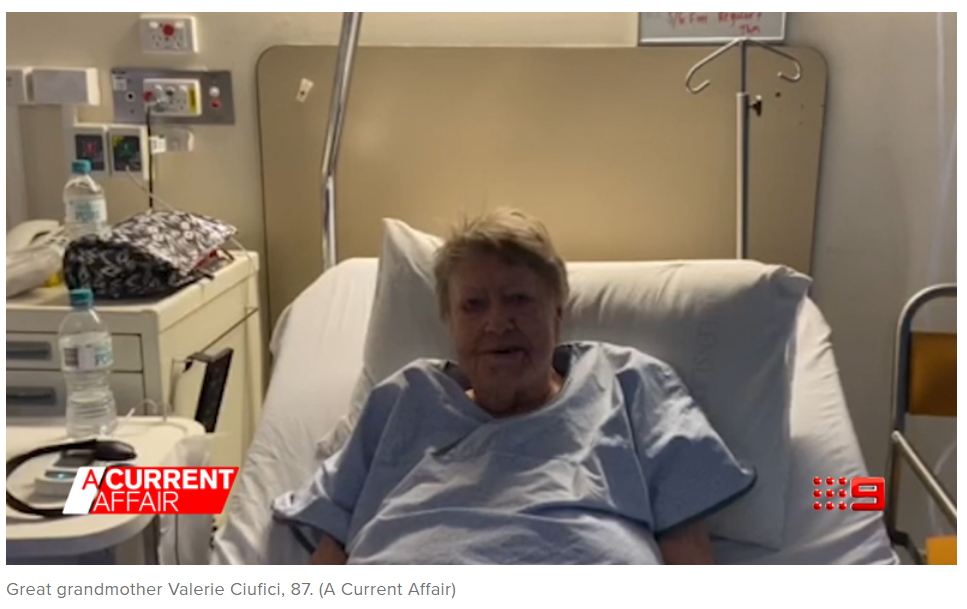
This particular story starts with Dan and his wife watching “A Current Affair” on Channel 9 on 28th January 2021.
The segment showed Valerie Ciufici, an 84 year old woman in poor health who had been tricked out of her life-long family home by her own granddaughter. The story upset Dan a lot. Perhaps it was because the woman looked much like his own mother June. Perhaps it was Valerie’s emphatic words in her hospital bed to help explain how it happened “When you are old and you are on your own, you become very vulnerable. And if someone shows a little bit of kindness towards you, you grab it with two hands because you desperately need it”.
Another thing Valerie said from the hospital bed was “I trusted my grand-daughter and believed in her, as you would – being our own”.
Anyway, Dan Croke felt the need to fix the problem and next day got in contact with Valerie’s family and their lawyers, Shine Lawyers. Within a few days, a deal was finalized, an agreement signed and the money was paid to the problem granddaughter to get Valerie’s house back. Sometimes having money to fix problems is a good thing. Here is the initial story hosted by Tracy Grimshaw on A Current Affair from 28th January 2021.
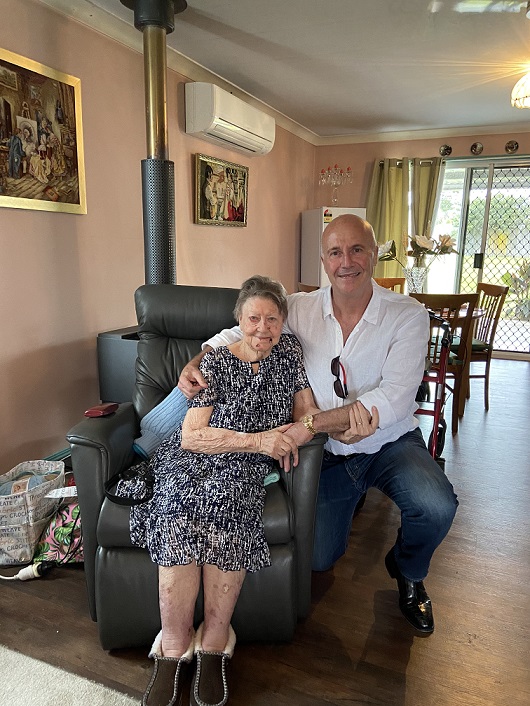
Then on 6th February 2021, A Current Affair hosted by Deb Knight ran a follow up story to describe the happy ending to the story and to acknowledge the nameless “white knight”. Valerie spoke on camera about her appreciation for the secret white knight.
A Thank You Card From Valerie
To My Mystery Friend
I want to thank you from the bottom of my heart [for] all the help you have given me when I needed it most.
I did a lot of praying for help but never did I think an angel would turn up with such a big heart.
I shall always be grateful to you. Thank you so much for your kindness.
Always you will be in my thoughts.
Always Val Ciufici
We have knowledge of other acts of kindness offered by Dan Croke, such as providing free rent for two years to a woman with two children whose husband had died suddenly. None of this is in the scale of Chuck Feeney, but as Dan quotes:
“I shall pass this way but once; any good that I can do or any kindness I can show to any human being; let me do it now. Let me not defer nor neglect it, for I shall not pass this way again.”
Etienne de Grellet QUAKER MISSIONARY
.Here are a list of profiles for people called : Dan Croke, Daniel Croke, John Croke, 2022
Dan Croke – software engineer
Dan Croke Qualifications
Licenses & certifications
Microsoft
Microsoft Certified IT Professional
Issuing authorityMicrosoft
Issued date and, if applicable, expiration date of the certification or licenseIssued Mar 2013No Expiration Date
Credential IdentifierCredential ID E216-4764
CompTIA
CompTIA Security+
Issuing authorityCompTIA
Issued date and, if applicable, expiration date of the certification or licenseIssued Feb 2010No Expiration Date
Credential IdentifierCredential ID HVELKYS22241C1HD
Dan Croke Current Position
Information Technology Staff
Company Name Dept of Defense
Dates EmployedJul 2012 – Present
Employment Duration 9 yrs 4 mos
LocationPortsmouth Naval Shipyard, Kittery, Maine
Information Technology Specialist (Applications Software (APPSW))
• Translate detailed technical specifications into programming specifications; develop, customize, or acquire applications software programs; and test, debug, and maintain software programs.
• Coordinate with other departments and clients to implement time-sensitive processing of information.
• Support of cross-platform (Solaris & Windows) applications, install updates and patches.
• Implement yearly rollovers of applications, Oracle databases, scripts and procedures in test and production environments.
Dan Croke Quotes
According to Dan Croke, “there are many definitions out there of what exactly a philanthropist is, but in a nutshell, a philanthropist is a person who believes that society should be able to benefit from the achievements of all those who have succeeded in life by being able to participate in that society”
Dan CrokeAbout the Author: Dan Croke Author
Dan Croke was a disadvantaged young man living in relative poverty in his formative years. This led Dan Croke to become a giver to others, not a taker. In a wide ranging interview Dan Croke explains that coming from a background of “living hand to mouth” in his early years, led to a lifetime of trying to build sustainable wealth for his own family and to give back to people he felt had been left behind.
Dan Croke is now a successful property investor, helping others to achieve financial freedom through investing. This Brisbane man, Dan Croke, who grew up in Warwick, Qld, moved to Brisbane and went on to become a wealthy property investor, having so far acquired almost 200 properties, some of which are individually worth as much as $5M and $10M. He has silently and anonymously helped scores of people over the years
You can find more at the Dan Croke website or by watching “A Current Affair” on Channel 9 from the 28th January 2021 about the secret philanthropist: Dan Croke.
Dan Croke Testimonial
A Testimonial To My Mystery Friend
I want to thank you from the bottom of my heart [for] all the help you have given me when I needed it most.
I did a lot of praying for help but never did I think an angel would turn up with such a big heart.
I shall always be grateful to you. Thank you so much for your kindness.
Always you will be in my thoughts.
Always Val Ciufici